
Perms Are Back: The Modern Permanent Wave
By Salon Bastille Team
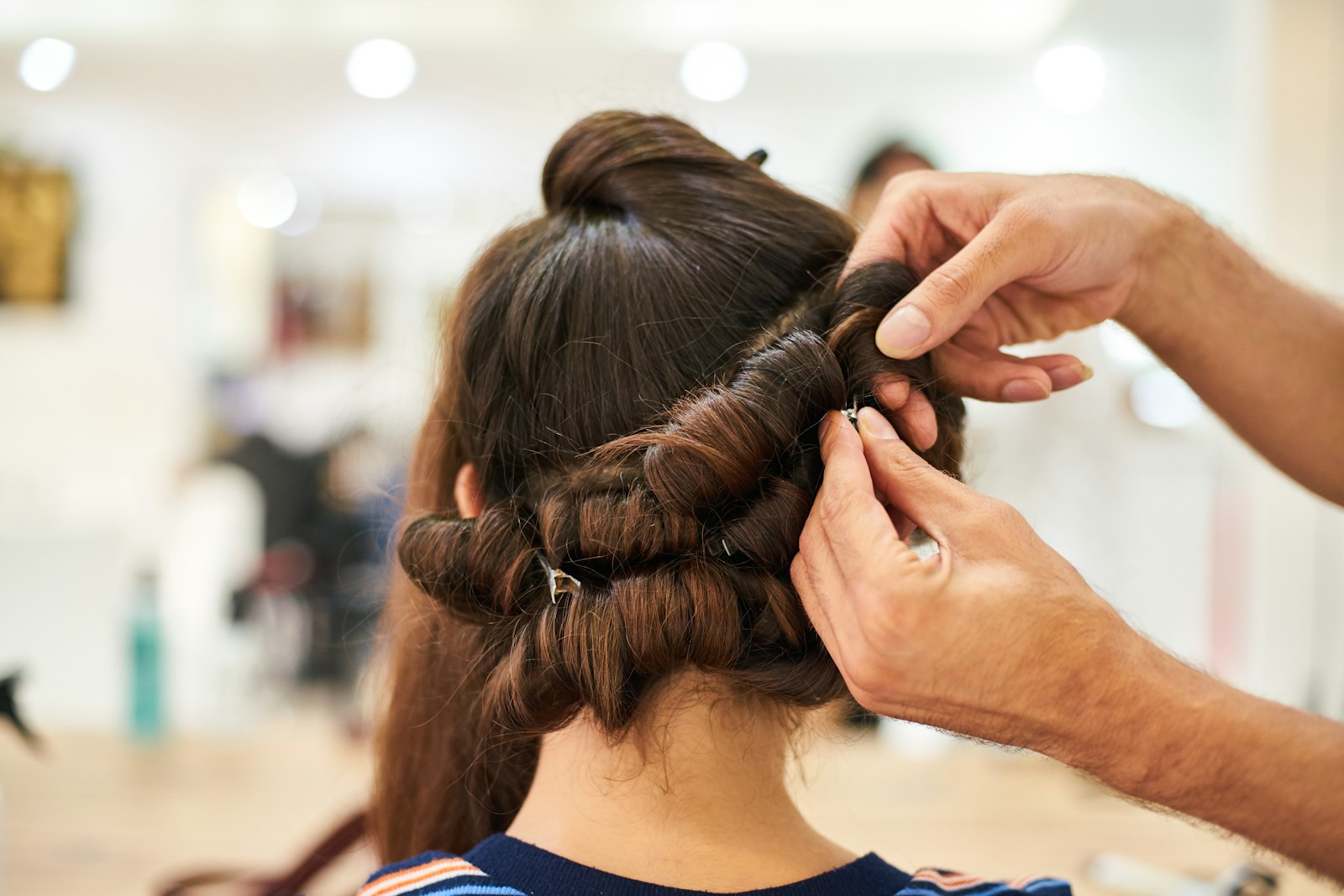
Ask anyone over fifty about their first perm and you will get a story. The rods, the smell, the helmet of tight curls that lasted through two presidencies. That perm earned its reputation, and for about twenty years it kept a whole generation away from the service entirely.
Then the pendulum swung. Guests in their twenties started coming in with photos of soft, undone waves and asking what would make their flat hair do that all the time. The answer, to their surprise, is a perm. Same chemistry as 1985, completely different technique, and it has quietly become one of the most requested services in our Montgomery salon. Here is what a permanent wave actually looks like now, from the stylists doing the wrapping.
What makes a modern perm different from an 80s perm?
The old perm had one setting. Small rods, wound tight, all over the head, processed hard. It gave maximum curl and maximum volume because that was the fashion, and the formulas of the day were not exactly gentle about it.
A modern permanent wave is a design service. Your stylist chooses rod sizes the way a colorist chooses shades: bigger rods for a lazy bend, medium for defined waves, a mix of sizes so the result looks like hair that grew that way. We can wrap away from the face, alternate directions so nothing looks striped, or perm only the mid-lengths and ends and leave the root smooth. The word perm covers all of it, which is why two guests can both say “I got a perm” and look nothing alike.
How does a permanent wave actually work?
This is worth understanding before you book, because it explains both the magic and the commitment. Your hair holds its natural shape through chemical bonds inside each strand. The perm solution softens those bonds while the hair sits in its new wound shape, and the neutralizer locks them back down exactly where the rod put them.
That is why a perm does not fade the way a gloss or a smoothing service does. The curled hair stays curled until scissors or new growth retire it. It is also why the service belongs in a salon. Where those bonds get broken and how completely they get rebuilt is the entire difference between springy, healthy curl and the crunchy damage stories your mother remembers.
What kinds of curl can a perm create today?
The beach wave perm is the one filling our books. It gives fine or straight hair the kind of relaxed bend that usually takes a curling iron and twenty minutes every morning, and it made air-dry-and-go a real option for guests who never had one.
Body waves are the quiet workhorse. Wrapped on the largest rods, they barely read as curl at all. What they add is lift and swing, which is why we suggest them to guests whose hair falls flat by lunch no matter what they spray at it. And spiral perms, the genuinely curly ones, are back too, worn longer and looser than their ancestors. If you carry a photo of what you want, bring it. A perm consultation works exactly like a color consultation, and the photo tells us more than any description.
How long does a perm last?
Because the change is structural, a perm is more marathon than sprint. The waved hair stays waved. What shifts is the frame around it: your natural texture grows in at the scalp, and months of brushing, washing, and sunshine gradually relax the pattern from tight to softer to memory.
Most guests refresh somewhere in the four to six month window, though plenty ride a body wave longer because grown-out soft wave still looks like a style. Keeping up with regular trims matters more with a perm than almost any other service, since the curl lives in the lengths and dry ends will announce themselves in a curly finish.
Can you perm color-treated hair?
This is the question we slow down for, because the answer protects your hair. Color and perming both work on the internal structure of the strand, and the hair has to be strong enough to handle the second service on top of the first.
A guest with balayage or highlights is not automatically out. Placement, how light the pieces are, and how the hair feels wet all factor in, and that assessment happens in the chair, not over the phone. Sometimes the plan is a round of conditioning treatments first, sometimes it is perming only the healthy regrowth, and sometimes the honest answer is that this year’s hair wants one service or the other, not both. We would rather lose a booking than your length.
How do you take care of a permed wave?
The first two days are the only complicated part. The bonds are still settling, and a ponytail crease or an early shampoo can literally reshape your brand-new curl. We schedule perms with that window in mind, so plan yours away from weddings and gym streaks.
After that, permed hair simply is curly hair, and it likes what curly hair likes. Moisture, mostly. Swap the sulfate shampoo, scrunch instead of rough-drying, and let a diffuser do the finish work. Our Ohio humidity, the same August air that sends our keratin guests running for cover, actually flatters a perm. The moisture in the air encourages the wave rather than fighting it, which is a lovely piece of revenge for anyone who spent years battling frizz on straight hair. Winter is the season to watch here instead: indoor heat is drying, so lean harder on conditioning between January and March.
Thinking about a perm?
If your hair will not hold a curl, falls flat by noon, or just bores you, a permanent wave consultation is a low-pressure way to find out what is possible. We will look at your hair’s history and condition, talk through rod sizes and patterns with real photos, and give you a straight answer about whether a perm will get you the result you are picturing. Service details live on our services page, and pricing is confirmed at the consultation once we know your length and the wrap you need.
Visit us at 10794 Montgomery Rd in Cincinnati, call (513) 791-0600, or book online and tell us you are curious about waves. Bring the photo. We love the photo.
Photo by engin akyurt on Unsplash.
Frequently asked questions
How long does a perm appointment take? +
Plan on two to three hours for a full permanent wave: a consultation and wrap, processing time while the solution works, a neutralizing step, and finishing. Partial perms and body waves on shorter hair run quicker. We confirm the timing when we see your hair, so you can plan your day around it.
Will a perm damage my hair? +
A properly done perm on healthy hair leaves it in good condition, just curlier. The risk comes from perming hair that is already compromised by bleach, box color, or heat damage, which is exactly what the consultation is for. If your hair is not ready, we will tell you honestly and build it up with conditioning treatments first.
Can I still straighten my hair after a perm? +
Yes. A blow-dry or a pass with a flat iron will smooth permed hair for a day or an event, and the curl returns the next time it gets wet. Constant daily heat will relax the wave faster though, so if you plan to straighten most days, a perm may not be the right service for you.
What is the difference between a perm and a keratin treatment? +
They are opposites. A perm restructures the hair's internal bonds to add curl or wave that lasts until it grows out. A keratin treatment coats the outside of the hair to smooth texture and fight frizz, and it washes out gradually over months. One adds pattern, the other calms it.
Ready for your next look?
Book with the Salon Bastille team in Cincinnati.