
Gray Blending vs. Full Coverage: Which One Is Right for You?
By Salon Bastille Team
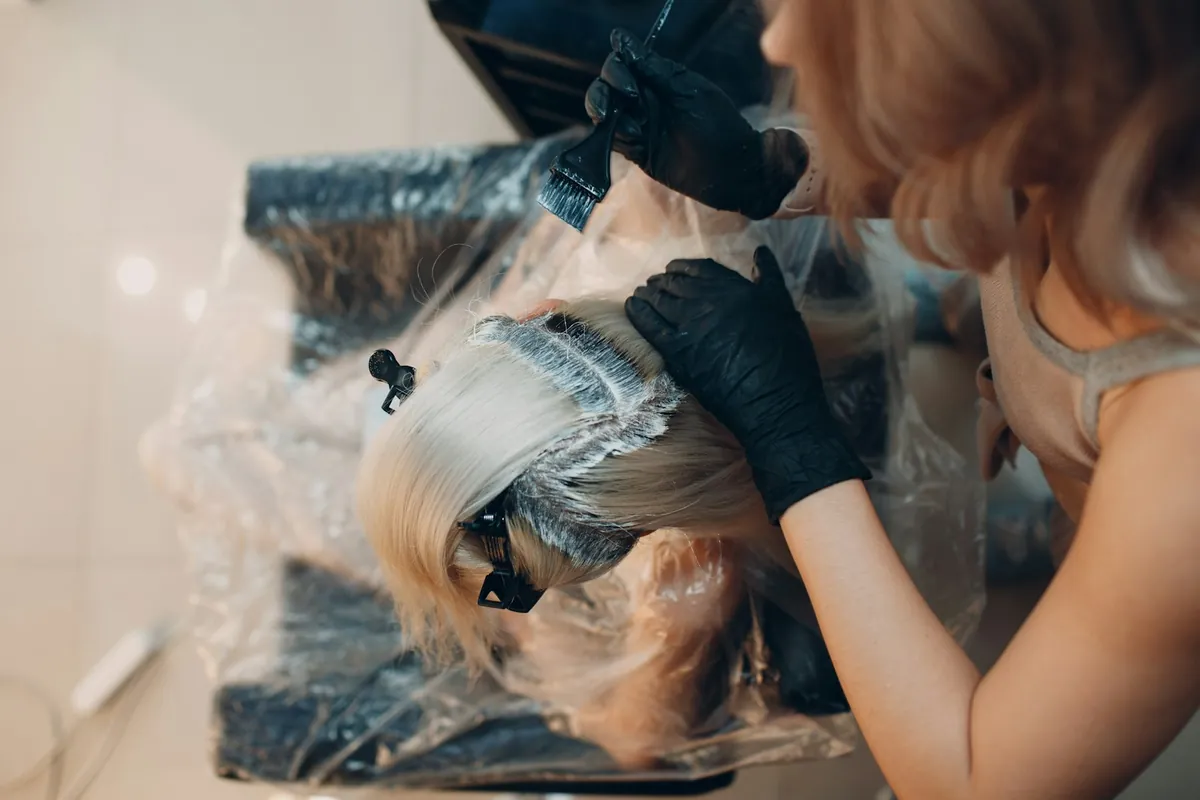
The gray conversation happens at our color stations in Montgomery almost every day, and it almost never starts with the word gray. It starts with a guest looking at her part in the mirror and saying “I hate what it is doing right here.”
What happens next depends on a choice that a lot of people do not realize they are making. You can blend gray, or you can cover it. Both are good answers. They just commit you to very different routines, and the one you will regret is the one that was picked without anyone explaining the trade. Here is how our colorists talk it through behind the chair.
What is the difference between gray blending and full coverage?
Think of blending as turning the volume down. Your gray is still in there, but it is now catching the light like a highlight instead of announcing itself against your natural color. Because the gray was never painted over, there is no hard edge when it grows.
Full coverage is a different job. Gray hair has lost its pigment, and on a lot of people it is also coarser and more resistant, so it takes a formula strong enough to put color back in and make it stay. The payoff is that finished, uniform look many of our guests want. The commitment is that the moment new growth appears, so does a visible line.
Neither one is the upgrade. They are two services that solve two different complaints.
Who is gray blending the right call for?
The guests who are happiest with blending usually tell us the same thing at the consultation. They do not mind gray. They mind the stripe.
Blending also plays well with the color work we already love doing. If you have been getting balayage or traditional highlights, your colorist can place those pieces so they absorb the gray at your part and temples, which are almost always the areas that bother people first. You walk out with color that looks like color, not like maintenance.
And the grow out is genuinely different. With blending, six weeks out, your hair looks a little softer. With coverage, six weeks out, your hair has a line.
Who should go with full coverage instead?
Some hair simply will not blend convincingly. Once gray takes over enough of the head, a blend starts to read as gray with some color running through it, which is not what the guest asked for. There is also a personal side to it that has nothing to do with percentages. Plenty of our guests know exactly how they want to look, and that look has no gray in it. That is a completely fine reason to choose coverage.
If that is you, know what you are signing up for. Hair grows around half an inch a month, so a root line usually starts showing somewhere around week four or five, faster if your gray is bright white against a dark shade. Guests who book their next appointment before they leave are the ones who never feel caught out.
How much upkeep does each one really take?
The appointment interval is only half of it. The other half is what happens in your shower for the weeks in between, and Cincinnati is not especially gentle on color. We have covered why color fades faster than people expect in its own post, and everything in it applies double to gray coverage, because once that deposited pigment washes out, gray is the first thing to come back through.
One more thing worth planning around. Your color schedule and your haircut schedule do not have to match, but they should be on purpose rather than by accident. Our honest take on how often you actually need a haircut is a good companion read when you are building the routine.
Can I switch from full coverage back to blending?
This is the request we get most often, and it is the one we are most careful about. There is old permanent color sitting on your mid lengths and ends, and there is new gray coming in at the root. Getting those two to meet without a hard line, and without lightening your hair into a condition it cannot recover from, takes a plan and some patience.
We will not quote that plan over the phone or guess at it from a photo. We need to see your hair, ask what has been on it, and be straight with you about how many visits it will take. Same goes for any big correction, which is why corrective color and extensions always start with a consultation here. If that is where you are, here is what actually happens at a corrective color consultation.
If you are staring at your part right now and deciding which way to go, come talk to us. You can see our color services on our salon services page, current rates are on the pricing page, and you can book an appointment or send us a question whenever you like. We are at 10794 Montgomery Road, and we would rather spend ten minutes telling you honestly which option fits your hair than have you commit to a schedule that was never going to suit you.
Photo by Maksim Chernishev on Unsplash.
Frequently asked questions
Will gray blending completely hide my grays? +
No, and that is the point of it. Blending softens gray so it reads as a highlight or a lighter ribbon in your color instead of a separate stripe. Most guests find that the gray stops catching their eye in the mirror, which is a different result than making it disappear. If you want no gray visible at all, you want full coverage.
Does full coverage color damage hair more than blending? +
Not automatically. Permanent gray coverage is a deposit driven service and it is usually gentler on the hair than lightening is. What tends to cause the damage is frequency and overlap, meaning the same mid lengths getting colored again every few weeks. A good colorist keeps fresh color on the new growth and refreshes the ends only when they need it. That single habit protects the hair more than any product does.
How gray do I have to be before blending stops working? +
There is no exact percentage, but somewhere past roughly half gray, blending starts to look like a lot of gray with some color in it rather than color with some gray in it. Gray also matters by placement. Heavy gray concentrated at the temples and the part line shows more than the same amount scattered through the back. Your stylist will look at where yours actually sits before recommending either one.
How long does it take to grow out full coverage color? +
It depends on your length and how much contrast there is between your natural gray and your colored hair, but it is usually a matter of many months rather than weeks. Hair grows around half an inch a month. We shorten that time by adding blended highlights and lowlights through the grow out so the line softens instead of sitting there, and most guests stay comfortable the whole way through.
Can I keep using box color between salon visits? +
We would rather you did not, especially with gray. Box color is formulated strong enough to cover the most resistant hair, so it tends to build up dark and flat on the mid lengths and ends, and it can react unpredictably with lightener later. If the cost of upkeep is the concern, tell us. There is almost always a schedule or a service that fits better than a drugstore box does, and our current rates are on the pricing page.
Ready for your next look?
Book with the Salon Bastille team in Cincinnati.