
Inside a Corrective Color Consultation
By Salon Bastille Team
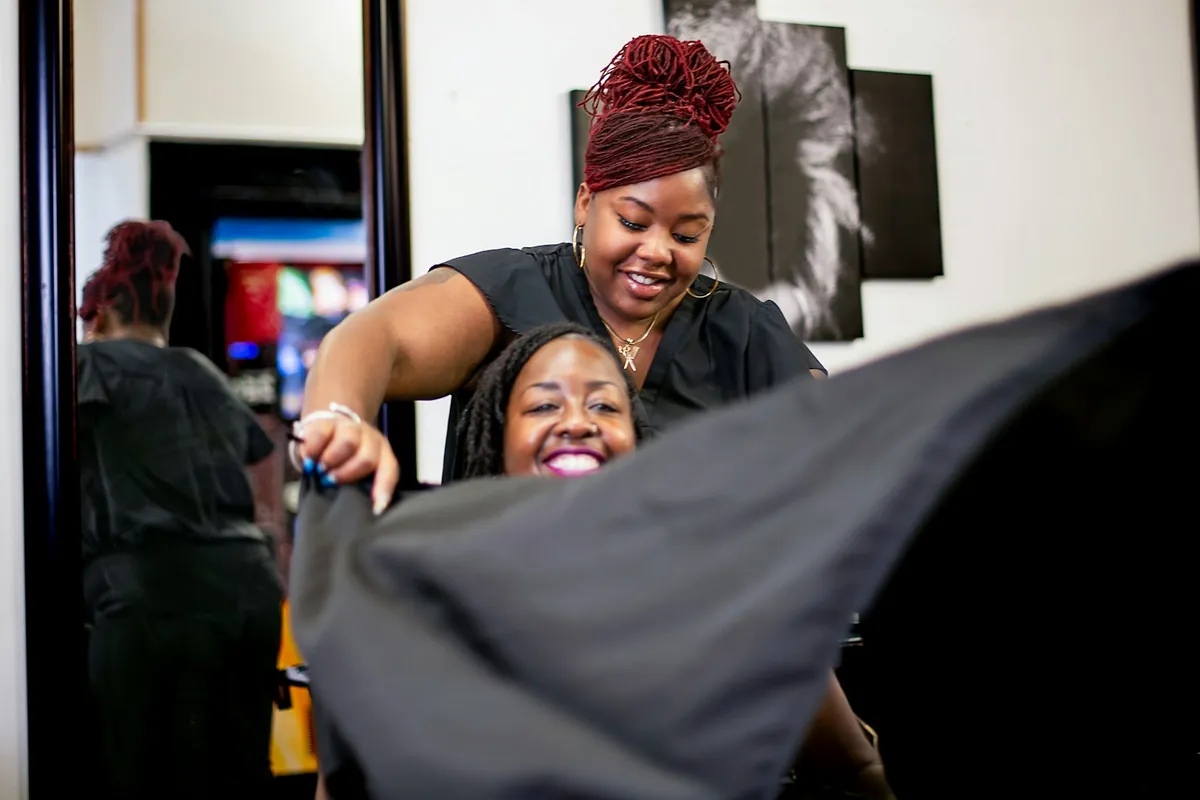
There is a particular look a guest gets walking into our Montgomery salon for a color correction. Shoulders slightly up, phone already open to a photo, an apology queued before anyone has said hello. We would like to retire that apology. Color that went sideways is not a character flaw, and it is one of the most common reasons people sit down in our chairs.
What surprises most guests is that the first appointment is not a color appointment at all. It is a conversation and an assessment, and it exists because corrective color is the one service where guessing is genuinely expensive. Here is what actually happens at that consultation, and why we are so stubborn about doing it first.
What counts as corrective color?
The label matters more than it sounds, because corrective color is priced, timed and planned differently from a standard color service. A regular appointment starts from your natural hair and a known formula. A correction starts from somebody else’s chemistry, sometimes several layers of it, and the hair itself is the only record of what happened.
The most common ones we see are dark box color that will not let go of the ends, blonde that has drifted orange somewhere in the mid lengths, and a hard line where two different colors meet. None of those are unusual. All of them need a look before anyone touches them.
Why won’t you quote corrective color over the phone?
We know this is the least satisfying answer in the salon. You want a figure, and we understand why. But a correction quote is really a bundle of decisions: how much lift is needed, whether it can be done safely in one sitting, whether toner alone gets you close, how much of the old color has to be broken up first.
Photos do not solve it either. Phone cameras adjust warmth and brightness on their own, salon lighting is not your bathroom lighting, and neither one shows us how the hair stretches when it is wet. So we handle rates the honest way. We give you the real number for your correction once we have seen what it involves, and you get it before anything is booked.
What actually happens during the consultation?
The first thing we do is look at your hair without product in it and without heat on it. Styling hides a lot. Curls and waves in particular can disguise banding that becomes obvious the moment the hair is stretched out straight.
Then we look at the hair in sections, because a correction is rarely one problem evenly distributed. Roots, mid lengths and ends usually tell three different stories. Your new growth might be perfectly healthy while the last four inches have been colored six times.
We also check condition by feel, not by opinion. A piece of wet hair that stretches and springs back is in a very different place from one that stretches and stays stretched, and that single test changes what we are willing to do in one appointment.
If your goal involves going lighter, we will often take a strand test from somewhere hidden. It takes a few minutes and it tells us how your hair actually lifts, which beats any prediction we could make by looking.
What will we ask about your hair history?
This is the part of the consultation that feels like an interrogation, and we promise it is not. It is chemistry. Permanent color, demi permanent color and direct dyes all sit differently on the hair and come out differently, so we need to know what we are lifting through.
A couple of items on that list matter more than people expect. Henna and some natural or compounded dyes can contain metallic salts, which can react with professional lightener. That is exactly the kind of thing we would rather learn at a consultation than discover during a service. Previous keratin or smoothing treatments matter too, which is why we go into detail about what to know before a smoothing treatment as its own subject.
If you genuinely do not remember, say so. “I think it was a box, maybe last spring, and it was darker than I wanted” is useful information. A confident wrong answer is not.
Can it all be fixed in one appointment?
This is where we would rather disappoint you early than in the chair. There is a ceiling on how much lift any given head of hair will take in one day, and pushing past it does not produce a brighter blonde. It produces damage that no product on our shelf can reverse.
So when a correction needs to be staged, we stage it. You will know at the consultation roughly how many visits it takes, what each visit is meant to accomplish, and what your hair will look like in between, because the in between matters. Nobody wants to spend three months in a color they did not agree to.
The other honest outcome is that we recommend something different from what you walked in asking for. Occasionally the best result on hair that has been through a lot is a shade closer to where it already is, or a cut that removes the worst of the history. We will explain why, and it stays your decision.
What does corrective color cost?
What we can promise is that you will not be surprised. The quote comes before the appointment, not after it, and if the plan changes mid way through a staged correction, we talk to you about it rather than adjusting quietly. Our standard service rates are listed on the pricing page so you have a starting frame of reference.
If budget is a real constraint, tell us at the consultation. It is genuinely useful information, not an awkward topic. There is often a version of the plan that gets you most of the way there, or a sequence that spreads the work out. We would much rather build around your actual budget than watch you book a service that stretches it.
How should you prepare for your consultation?
Unstyled hair helps us more than styled hair does. If you can come without heat tools that day, do. We are looking at your hair, not at your blowout.
Bring inspiration photos, and bring more than one. A single photo tells us a shade. Three or four tell us what you actually respond to, which is usually a level of brightness or a warmth direction rather than one exact color. It also helps to know which parts of your current color you like, because a correction rarely means changing everything.
One practical note about scheduling. Corrections take real time, and our longest available blocks are early in the week, when we are open until eight on Monday, Tuesday and Wednesday. If you work standard hours, those evenings are usually the easiest place to fit a long appointment. We are closed on Sundays.
While you are thinking it through, two other posts cover ground that comes up constantly in these conversations: why hair color fades faster than people expect, and the difference between gray blending and full coverage, which is its own kind of corrective conversation.
Come in and let us look
The shortest path out of a color you do not like is almost never another product. It is twenty minutes with a colorist who can see the hair, ask the right questions, and tell you the truth about what it will take.
You can see the full range of what we do on our salon services page, and you can book a consultation or send us a question whenever it suits you. We are at 10794 Montgomery Road, easy to reach from Montgomery, Kenwood and Blue Ash, and we would rather spend those twenty minutes being straight with you than sell you an appointment that was never going to get you there.
Photo by Land O’Lakes, Inc. on Unsplash.
Frequently asked questions
Can I just book a corrective color appointment online? +
Please book the consultation first. A correction is not a fixed service with a fixed length, so putting it straight on the schedule means we have either blocked far too little time or held hours we did not need. The consultation is short, it is a real conversation with the colorist who would do the work, and it is what lets us book the actual appointment correctly.
Will you have to cut my hair? +
Sometimes, and we will tell you honestly if that is where we land. Lightener cannot rebuild hair that has already lost its structure, so when the last few inches are compromised, taking some length off is often what makes the color look good rather than merely different. It is your call every time. We just will not pretend that color alone fixes a condition problem.
I used box color at home. Should I tell you? +
Yes, and please be specific about it. Box color is built to grab hard and it layers up on the mid lengths and ends, which changes how lightener behaves on your hair. Knowing it is there is the difference between a colorist planning around it and a colorist discovering it halfway through a service. Nobody here is going to judge you. We have all seen a bad week and a drugstore aisle.
How many appointments does color correction usually take? +
It depends on how much artificial pigment is on the hair, how much lift the goal needs, and what condition your hair is in. Simple tone corrections can be a single visit. Going from years of dark box color to a genuine blonde is usually a series of appointments spread over months. We will give you the honest number at the consultation, along with what each visit does.
Can you fix color that another salon did? +
Often, yes, and it is a normal part of our week. We are not interested in criticizing whoever did the last service, because we were not standing there and we do not know what they were working with. What we need from you is the timeline: what was done, roughly when, and what has been on your hair since. Then we look at the hair itself and tell you what is realistic.
Ready for your next look?
Book with the Salon Bastille team in Cincinnati.