
What Does a Deep Conditioning Treatment Do?
By Salon Bastille Team
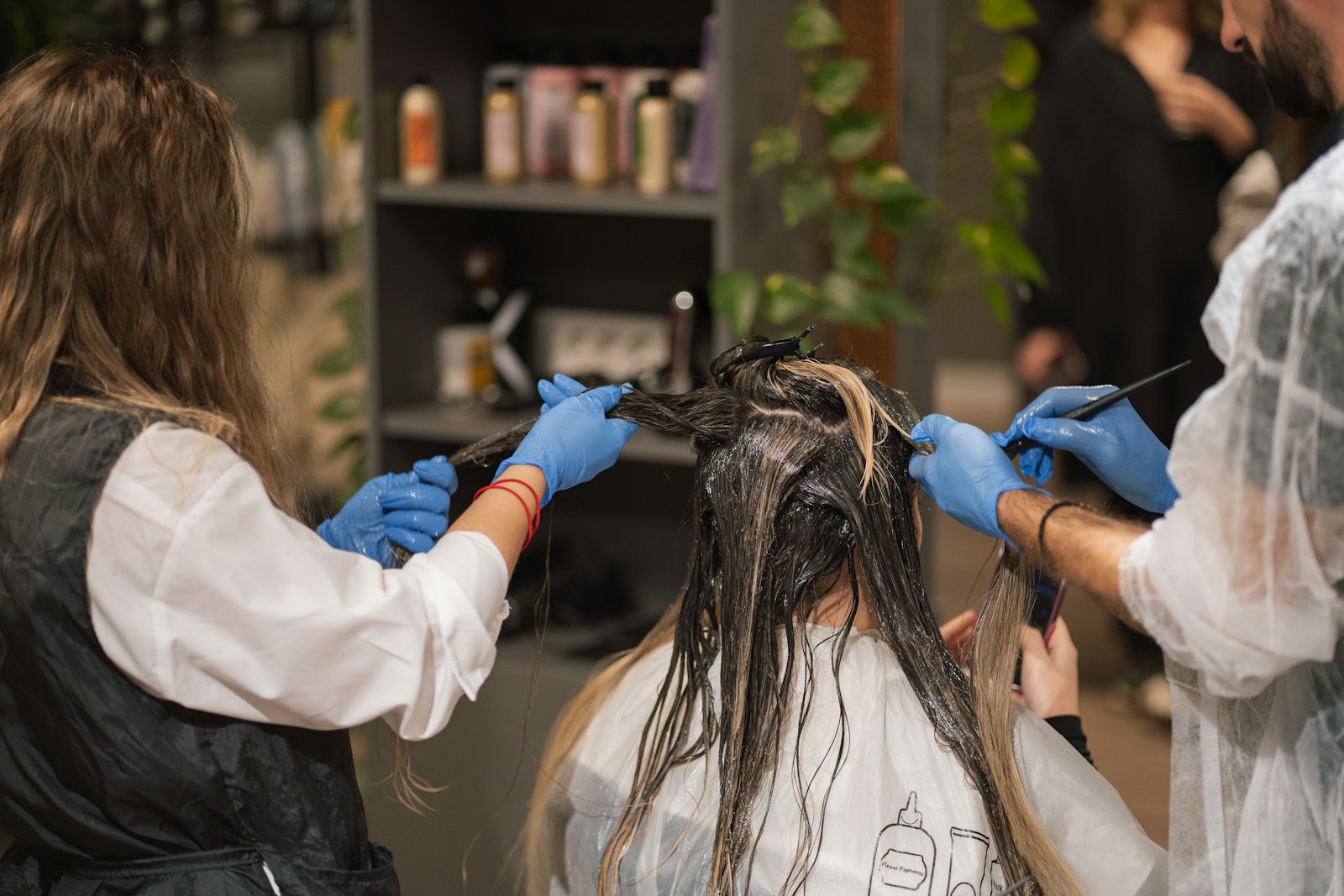
By the middle of September we start hearing the same sentence from guests sitting down in our Montgomery chairs. “My hair feels like straw.” Three months of pool chlorine, lake days, sun, and a flat iron fighting Ohio humidity every morning all show up at once, usually a few weeks after the kids go back to school.
The next question is almost always whether a deep conditioning treatment is worth it, or whether a better bottle of conditioner at home would do the same thing. The honest answer depends on what your hair is actually missing, and that is something most people are guessing at. Here is how our stylists think it through behind the chair.
What does a deep conditioning treatment actually do to your hair?
The part that surprises people is that hair cannot heal. The strand growing out of your scalp is no longer living tissue, so once the outer layer is roughed up by bleach, heat, or chlorine, it stays that way until it grows out and gets cut off. Nothing in a jar reverses that.
What a treatment does is fill in and coat the damage. Conditioning ingredients are attracted to the areas of the hair that are most worn, so they settle exactly where you need them. The rough patches smooth over, the strands stop catching on each other, and light reflects off the surface again instead of scattering. That is why a good treatment makes damaged hair look and feel dramatically better even though the damage is technically still there.
Keep that in mind and you will never be disappointed by one. It is a big improvement, not a reset.
How is a salon treatment different from the conditioner in your shower?
Your everyday conditioner has a hard job. It has to work on the first wash and the fortieth, on the whole head from root to tip, without leaving anyone feeling greasy. That means it is formulated light on purpose.
A treatment does not have that constraint. It is used occasionally, applied mostly through the lengths and ends where the damage lives, and left long enough to do something. Gentle heat helps it spread evenly and work into the hair rather than sitting on top.
The piece people overlook is the diagnosis, and it is the real reason a salon treatment earns its place. Before anything goes on, your stylist is feeling your hair wet, watching how it behaves, and asking what you have done to it lately. That tells us which kind of treatment to reach for, and choosing wrong is the most common reason a home mask does not seem to work.
Does my hair need moisture or protein?
This is the most useful thing in this post, because it explains why so many people say conditioning treatments “do nothing” for them.
Moisture treatments soften and add flexibility. Protein treatments temporarily reinforce hair that has lost its strength, which is common after lightening. Both are good. The trouble starts when you use the wrong one, or too much of the right one.
We regularly see guests whose hair is stiff, crunchy, and snapping, and when we ask about their routine they are using a strengthening mask every single wash because the label promised repair. Their hair is overloaded with protein and starving for moisture. The fix is to stop the protein, not add more. The opposite happens too. Someone with lightened hair piles on rich moisture masks and ends up with hair that feels mushy, will not hold a style, and stretches like a rubber band. That hair needs structure.
If your hair got worse after you started using a treatment, this is almost certainly why.
Who benefits most from a deep conditioning treatment?
Lightened hair tops the list. Balayage, highlights, and anything platinum have been through a process that opens the hair up, and those ends are the oldest, most processed hair on your head. Permed hair is close behind, since curl behaves best when it is well hydrated. Our post on the modern permanent wave goes into how much moisture matters for keeping a perm soft instead of frizzy.
Cincinnati seasons add their own pressure. Summer brings chlorine, sun, and humidity that sends people reaching for hot tools. Then the furnace comes on in November and indoor air turns dry enough to leave hair brittle and full of static. The two transitions, September and early spring, are when a treatment tends to make the most visible difference.
We also want to be clear about who does not need one. If your hair is fine, uncolored, and you rarely use heat, a heavy salon treatment can simply weigh it down. We would rather tell you that than add a service you will not notice.
Should you get a conditioning treatment before or after color?
Porous hair is thirsty. Put color on it and the most damaged sections absorb far more than the healthy sections, so you get uneven results at the start and faster fading afterward. Treating the hair first gives the color a more even surface to work with. We covered the fading side of this in why hair color fades so fast, and porosity is the thread running through both problems.
You do not always need a separate appointment for this. Ask about adding a treatment when you book your color, and your stylist will decide whether it belongs before the service, after it, or at your next visit.
How often should you get a deep conditioning treatment?
Results from a single treatment last through several washes, then gradually wash out. That is normal, and it is why consistency beats one dramatic appointment. A weekly mask at home, matched to what your hair needs, carries the benefit forward between visits.
More is not better past a point. Hair that is conditioned constantly can turn limp and hard to style, and protein used too often causes the stiffness described above. If your hair feels great, you do not need to chase it.
When will a conditioning treatment not fix the problem?
A split end cannot be glued back together. Products that claim to seal them hold the two halves in place until the next wash, and the split keeps traveling up the strand in the meantime. The only real fix is scissors, which is a big part of why we wrote an honest guide to how often you should get a haircut.
Daily frizz is another one that treatments get blamed for not fixing. Conditioning reduces frizz caused by damage, but it will not change your natural texture on a humid July morning. If that is the battle you are fighting, a keratin or smoothing treatment is built for it.
If you are not sure which camp your hair falls into, that is exactly what a visit is for. You can see our conditioning treatments alongside everything else on our salon services page, current rates are on our pricing page, and you can book an appointment or ask us a question anytime. We are at 10794 Montgomery Road, and we will tell you plainly whether your hair needs a treatment, a trim, or just a change in what you use at home.
Photo by Ionela Mat on Unsplash.
Frequently asked questions
Can I just do a deep conditioning mask at home instead? +
For maintenance, yes, and we encourage it. A good mask once a week keeps healthy or lightly processed hair in good shape between visits. What a home mask cannot do is diagnose. Most people with dry hair are guessing between moisture and protein, and a guess in the wrong direction can leave hair stiffer or limper than before. A salon treatment is worth it when your hair has changed and you are not sure why.
How long does a deep conditioning treatment take in the salon? +
Most treatments process for somewhere around ten to twenty minutes, sometimes with gentle heat, plus the time to rinse and style. Because it is short, a treatment is easy to add to a haircut or color appointment you already have on the books. Mention it when you book so your stylist can plan the time.
Will a deep conditioning treatment make fine hair flat or greasy? +
It can if the formula is too heavy or it is applied at the roots. Fine hair still benefits from conditioning, especially if it is lightened, but the product should be lighter and kept through the mid lengths and ends. This is one of the reasons we would rather choose the treatment for your hair than hand you the richest mask on the shelf.
Does a conditioning treatment help with frizz? +
It helps with frizz caused by dryness and damage, because smoother, better hydrated hair absorbs less humidity from the air. It will not overpower the naturally frizzy texture many people deal with every Cincinnati summer. If you are fighting frizz daily with a flat iron, a keratin or smoothing treatment is the service designed for that job.
Is a hair mask the same thing as a deep conditioner? +
Mostly, yes. Hair mask and deep conditioner are marketing names for the same category: a richer conditioning product that stays on longer than a rinse out conditioner. The label tells you very little. What matters is whether the formula leans toward moisture or protein, and whether that matches what your hair is missing.
Ready for your next look?
Book with the Salon Bastille team in Cincinnati.